
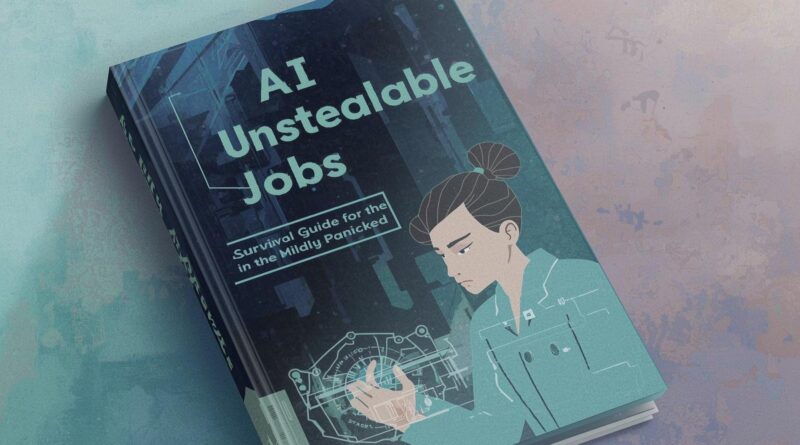
AI Unstealable Jobs A Survival Guide for the Mildly Panicked
So you’ve spent the last week perusing TikTok vids about AI “taking all the jobs” while your boss casually discusses “efficiency tools” in Slack like it’s not corporate code for “we bought a robot that works weekends.” Cute. You’re reloading LinkedIn like a crisis hotline, debating whether to code, become a plumber, or establish a mushroom farm in the woods. Relax. Sort of.
AI is definitely going to take a lot of occupations, especially the ones where you sit in front of a computer screen, move digital boxes around, and call it “project management.” Some work remains stubbornly, terribly human. Messy, emotional, physical, and out of control. Algorithm-unfriendly stuff. Today we’re discussing the unusual, resilient parts of the economy where you’re safer than your favorite Starbucks barista during a self-checkout rollout. You should quit asking ChatGPT if you’re “still relevant” and read something.
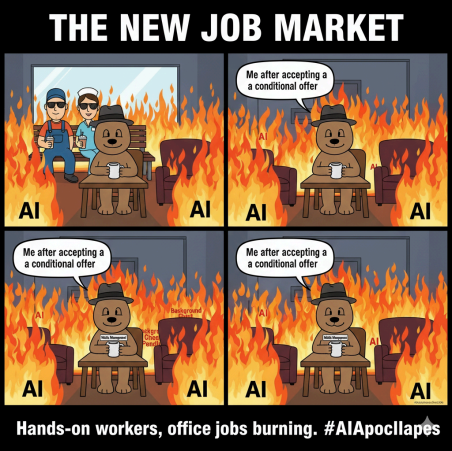
1. People who work with things in the real world, like plumbers and electricians AI doesn’t want jobs that involve crawling beneath strangers’ sinks.
Plumbers chuckle and raise their hourly rate when someone tweets “All jobs will be automated.”
Plumbers, electricians, HVAC experts, and appliance repair people are basically the last boss of “good luck automating this.” Coding robots can’t fit into your 90-year-old crawlspace to find out why your pipes scream at 3 a.m.
Also, who is allowing Boston Dynamics’ mechanical dog to use the bathroom? Exactly. Why these jobs are AI-safeish:
There is anarchy in every house. Each home is wired and plumbed differently. AI appreciates patterns, not “do-it-yourself” house improvements that include duct tape and a dream. You need hands. Actual hands. And knees. And a lower back that might or might not make it. Liability is not a joke. One false move and the whole block goes dark. Or floods. Or catches fire. Not quite “just hit undo.”
These trades are already short-staffed in the U.S., and Boomers who know how to fix anything are moving to Florida as quickly as their knees will take them. Everyone under 30 was told to study “Communications” and wonders why the tool belt guy charged $150/hr. Check your reality:
These occupations might not sound cool on TikTok, but
You can start by going to trade school or doing an apprenticeship, which means you get paid while you learn.
Once you have some expertise, it’s extremely likely that you’ll make six figures in cities with a lot of demand.
AI can write your bills, but it can’t clear up Karen’s basement.
You want to keep your job? Find out which wire you shouldn’t touch.
2. Nurses, caregivers, and anybody else who comes into contact with bodily fluids AI can act like it cares. It can’t pick up after your grandpa.
Robots constantly attempting to get into healthcare, but then they back off softly, saying, “Yeah, no, that’s a lot.” Yes, AI can read scans, look at test findings, and write cold, emotionless medical notes. But when it comes to taking care of people? People who are real, untidy, unexpected, and leak?
Nurses, CNAs, home health aides, and caregivers are what keep the system from falling apart like Jenga.
AI can help your grandma remember to take her pills. While she narrates the same story for the 47th time, it can’t make her take them.
Why these jobs are still safe:
You can’t make compassion happen automatically. You can act like you mean it in a chatbot. At 3:12 a.m. at a hospital, you can’t fake it.
Bodies are a mess. Every patient is unusual, every group of symptoms is strange, and no one reads the directions.
People are important to families. People don’t want a robot in the room when they get unpleasant news. They want someone who understands and can look them in the eye. There is already a significant need for nursing and caregiving employment in the U.S., and that demand is only going to grow as Boomers get older and Gen X refuses to recognize they are next.
Irony on top of irony:
Tech bros who make AI will one day need… nurses. Life goes in circles, baby. If you can deal with:
Strange changes
Feelings of people
People who freaked out after looking up their symptoms on WebMD… AI isn’t the true danger. It’s burnout. But that’s a different rant.
3. Therapists, social workers, and professional emotional damage control AI can tell you “10 ways to change your mind.” It can’t look you in the eye and say, “But how does that make you feel?”
Yes, there are already bots and AI therapists that can help with mental health. Yes, they are kind of scary. And indeed, right now, someone is spewing their anguish into a chat window. But we all know that if your life is really falling apart, you want someone. One that is real. With a face on it. And eyebrows too. And being able to let out a big sigh when you claim you texted your ex again.
Social workers, addiction specialists, therapists, and counselors all need to be able to read between the lines, build trust, and understand emotions in a way that isn’t easy to put into training statistics.
If you’ve ever formed a bond with a therapist over your childhood trauma, consider replacing it with a talking spreadsheet. That’s right.
Why AI has trouble here:
Everything depends on the situation. Trauma, culture, family, and vibes are all very personal and chaotic.
Relationship > script. The relationship is what heals, not the counsel.
Ethics are crazy. If you say “My AI therapist leaked my breakdown to a server farm,” you may be sued.
Are some elements of these jobs being done by machines? Sure, scheduling, taking notes, filling out intake paperwork, and dealing with insurance are all part of it. But the heart? Being with someone else as they fall apart? No shot.
If you can handle:
More listening than talking
Messy people in HD
People who say “Not to trauma dump, but…” are in one of the jobs that robots can’t do very well.
4. Jobs that use sharp tools: chefs, hairstylists, and tattoo artists
You’re upset if a robot messes up your spreadsheet. What if it messes up your face? Court. Hey, do I suppose that an AI robot arm could technically give you a fade? Most likely. Would you let it get close to your neck? No way.
These vocations involve taste, judgment, and the ability to take risks: hairstylists, barbers, tattoo artists, piercers, makeup artists, and even chefs. You are putting your looks and sometimes your skin in the hands of another else.
You think you’re nervous now? Wait until “TattooBot 3000” stutters while it is tattooing your back.
Why it’s hard to automate certain jobs:
Taste doesn’t make sense. Trends, culture, and personal delusions all affect what looks “good.”
Everyone wants to feel unique. You don’t say “My barber gets me” about firmware. Mistakes last forever. You can’t use Ctrl+Z to fix a terrible dragon tattoo. Even though automation is making its way into kitchens, top chefs and creative cooks are still very human. AI could write recipes. It might make your door dash perform better. But the individual who chose to set fire to a meringue while ranting at a line cook? People. All of it. These jobs also have a vibe that AI can’t fake. The gossip in the salon. The chef’s enthusiasm. The tattoo artist is making fun of you for your “Live Laugh Love” script idea. You can’t teach that. You can only live it.
5. Kindergarten teachers and people who take care of little kids
AI can help you learn math. It can’t stop a 5-year-old from licking the glass. If you want “jobs safe from AI,” look for ones that machines don’t want. Teaching is hard in general, but teaching young kids and elementary school kids? That is a war zone in its own right. Kindergarten teachers, early childhood educators, and daycare workers are all people who do the following at the same time:
Teaching the alphabet
How to deal with crayon hostage situations
Handling 12 little emotional breakdowns before 10 a.m.
AI can help with all the neat and tidy digital things, like lesson plans, grading, and cute worksheets. But being in a room full of little kids whose nervous systems are all over the place? No algorithm is signing up.
Even if an AI tried, a 7-year-old would be able to hack it in a week.
Why robots can’t do these jobs:
Kids can be hard to predict. They quarrel, cry, hug you, bite someone, and question if you’re “old.”
It matters that you care. Parents want to leave their kids with real people, not smart TVs on wheels.
There is physical anarchy in the classroom. You need to be able to see, move quickly, and stop a child from eating glue while another one pees on the plant.
Are these jobs in the U.S. not paid enough and not respected? Sadly, absolutely. Should society put the people who are keeping the next generation alive and somewhat educated first? Yes, too. Will AI make this better? No. It will only send you more workbooks. You will definitely be able to handle the AI wave if you can handle a day in a kindergarten classroom.
6. Construction for blue-collar workers and “Please Don’t Let This Collapse” Work AI can build the house of your dreams. It can’t haul drywall up three flights of stairs. Have you ever noticed that every picture of a smart city includes robots building skyscrapers? In actual life, though, it’s still just a bunch of people in hard hats wondering who moved the ladder.
Carpenters, framers, roofers, and heavy equipment operators all have professions that are very hard to fully automate. Yes, there are high-tech robots that build bricks in labs and 3D printers that make little dwellings. But 104°F on an actual job site in Phoenix? Men named Mike and ladies named Sam are trying not to die.
If you need to wear a hard helmet and sunscreen with an SPF higher than your GPA, AI isn’t your biggest concern.
These jobs are safer because:
There is a lot of mess at work. Robots hate it when the ground is uneven, the weather is bad, there are delays, or parts are missing.
Decisions in a split second. “Is that beam safe?” is not a test with many answers. Laws and rules. No one wants to say, “The building fell, but don’t worry, we saved money on workers by using robots.”
There aren’t enough skilled construction workers in the U.S. While all is going on, everyone is screaming about rent and the lack of homes, as if structures grow from nothing. If you want:
Work that is in high demand
Skills you can use anywhere
The pleasure of pointing to something and saying, “I made that” Construction workers don’t have to worry about AI. Their knees? A different story.
7. The “Deeply Human, Deeply Messy” Jobs: Chaos Managers, Comedians, and Clergy AI can copy jokes and sermons. It can’t bomb on stage or calm someone in a hospital chapel at 2 a.m.
There are a lot of jobs that fall under the “human connection/chaos management” category. Think of: comedians
Imams, priests, pastors, and rabbis
Organizers in the community
Planners for weddings
Mediators
Real coaches, not the “DM me to change your mindset” kind you see on Instagram (although, maybe them too)
AI merely doesn’t have the trust, timing, presence, instinct, and kind of improvisational energy that these roles need. It can copy the words. It can’t make the room look as it does. An AI wedding planner could help you plan your day. It can’t get your mom to quit moving the seating chart around throughout the wedding.
Why these careers still seem safe:
Feedback in real time. When you bomb a joke, it hurts.
Social interactions. Good luck encoding power, culture, and family drama. People want other people. When they’re laughing, crying, or doing something that only happens once in a lifetime, it’s even more important.
Will AI be able to write jokes, speeches, scripts, and outlines for sermons? It’s already happening. Will it take the place of the person on stage or in the room? No. At the very least, it becomes the unpaid intern. At best, it’s a tool. It doesn’t get a lot of attention.
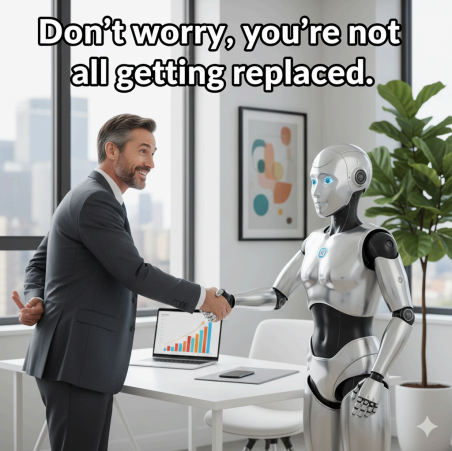
So… Are All the Other Jobs Messed Up?
Not precisely. AI is taking over a lot of occupations, but they aren’t going to go away. A lot of us are receiving “AI coworkers” who do aspects of the work we secretly disliked anyhow, such writing, designing, coding, marketing, and customer service.
You don’t really want to question, “Which jobs are 100% safe from AI forever?” because that list is limited and largely includes mops, needles, and power tools.
A better question is: Does this profession depend a lot on being physically present in places that aren’t always safe?
Trust and emotion in real time?
People don’t want to give a glitchy software a lot of responsibility?
If so, congratulations: AI may nibble at the margins, but it’s not going to eat your job anytime soon.
You Made It to the End. Courageous. Careless. A Little Unemployed?
Look at you! You’re still here and you didn’t move to “AI prompt engineer salary” midway through. Growth.
Here’s the harshly cute truth: Some jobs are much less likely to be replaced by a fancy autocomplete than others. You’re in a safer lane than most if your job involves real people, genuine emotions, real buildings, or real mess.
If you can conduct your whole job in a browser tab while sitting still in a hoodie? Yeah, maybe you should learn a trade, how to deal with people, or something that has electricity. In any case, I “wish you the best” in the job market of 2025 and beyond, which is not scary at all. Choose a lane: tools, tears, toddlers, or tattoos. The robots can’t do everything.