
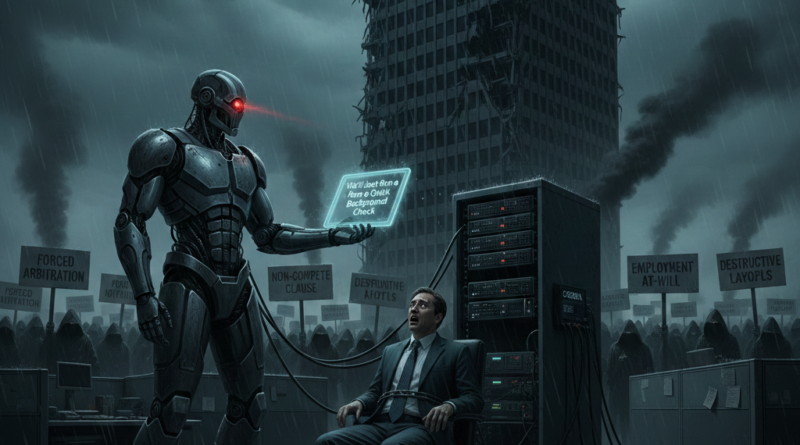
We’ll Just Run a QuickBackground Check And Other ThreatsFrom Corporate America
You did it. You survived the interview, fake-laughed at the hiring manager’s “we’re like a family” line, and nodded through 45 minutes of “we really value culture.” Now you’re staring at an email that says: “We’re excited to move forward, pending a background check.”
Which is corporate for: “We’re about to dig through your past like an FBI ex who still knows your Netflix password.”
Relax (but not really). In the U.S., background checks are practically a hobby for jobs now. From your local Starbucks to that fully remote tech role where you pretend to work between TikTok scrolls, they all love “verifying your information” like you’re applying for a security clearance instead of an entry-level social media gig.
So let’s walk through what they actually check, when they do it, and how screwed you are on a scale from “lol you’re fine” to “why did you put ‘proficient in Excel’ when you meant ‘can open Excel.’”
Ding! You’re “Conditionally Hired” (Translation: We Don’t Trust You Yet)
If you got a “conditional offer,” congrats: you’re hired… unless your past says otherwise.
Most normal, semi-functioning U.S. jobs run background checks after they’ve decided they like you but before they let you anywhere near their Wi‑Fi or payroll. They’re not wasting money on background checks for every “I’m a people person” applicant who ghosted after round one.
So they:
● Flatter you with an offer.
● Say it’s “conditional.”
● Then unleash a third-party company that has more info on you than your own mother.
Yes, this is the part where they dig up the traffic ticket you forgot about from 2019.
They’ll usually check:
● Criminal records (federal, state, maybe county if they’re feeling spicy) ● Employment history (did you really work at that startup or was it just vibes?) ● Education (did you actually graduate or just “attend” until the loans hit?)
Rhetorical question: Why does a $19/hr receptionist job need to know if you rolled a stop sign once in college? Great question. Capitalism.
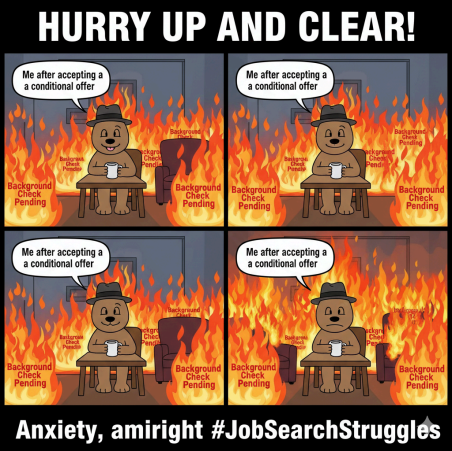
“This Role Requires a Background Check”= Welcome to the FBI Lite Experience
Some jobs treat background checks like a fun little personality quiz. Spoiler: it’s not.
The more “serious” the role, the more invasive the background check. If you’re dealing with money, kids, medicine, or people’s data, they are absolutely going full detective on you.
Think:
● Banking, finance, fintech bros
● Healthcare (from nurse to front-desk greeter)
● Government and defense contractors
● School, daycare, tutoring
● IT/security roles where you could theoretically nuke the system
You wanted a remote job in tech; you got an unofficial security clearance process instead.
These jobs may:
● Pull your credit report (because bad credit = you might… steal? Sure, Jan.) ● Check more extensive criminal databases
● Verify every job you listed that wasn’t a fever dream
● Ask for references who don’t hate you
Is it overkill? Yes. Will they still do it? Also yes.
The Social Media Stalking Phase (Yes, Your TikTok Is On Trial)
If you think recruiters don’t stalk your social media, I have a MySpace password to sell you.
Official background check: “We’ll be running a criminal and employment check.” Unofficial background check: “We’re absolutely lurking your Instagram, TikTok, LinkedIn, and probably your Venmo if we’re bored enough.”
What they’re actually looking for:
● Open racism, sexism, or general “this person will get us sued” energy ● Public drug use content (your “420 everyday” bio is… a choice) ● Violent, unhinged posts where you threaten your ex (or worse, your boss) ● You trash-talking past jobs in excruciating detail
Yes, Karen in HR sees your “I hate corporate America” posts. She hates it too, but HR is a prison.
No, they usually don’t care about:
● Thirst traps
● Cringe dance videos
● You posting iced coffee every 3 hours
But that drunk tweet from 2015 where you went off on your old manager? Maybe archive that.
Pro tip list for bare-minimum damage control:
● Set old accounts to private.
● Change your username if it’s “@corporateamericaisevil.”
● Google yourself and see what shows up. If it’s chaos, fix it.
What They Actually See (And What They Don’t… Usually) Good news: They can’t see everything. Bad news: They can see enough.
Let’s clear this up: background checks are not magic spyware that show every terrible decision you’ve ever made in 4K. They’re limited by:
● Laws (hi, Fair Credit Reporting Act)
● State rules (some states don’t allow certain old records)
● What they pay the vendor for (cheap package = basic stalking, premium = full drama)
Typical things they can see:
● Criminal convictions (arrests, depending on jurisdiction)
● Certain pending charges
● Driving records (for driving jobs, obviously)
● Education verification (degrees, graduation dates)
● Employment dates and titles (if employers respond)
Things they usually can’t or don’t bother with:
● Your entire browser history (you’re safe… for now)
● Your group chat unhinged rants
● Every unpaid parking ticket 10 years old depending on state and type Deep breath. Your 2 a.m. WebMD searches are still between you and your anxiety.
And yes, they’re legally supposed to:
● Get your written consent
● Tell you if they use a third-party screening company
● Let you see the report if they deny you based on it
Do people read what they sign in onboarding portals? Absolutely not. But still.

Timeline of Panic: When Background Checks Happen in the Hiring Chaos
There’s a pattern to when jobs drop the “we’ll just run a quick background check” bomb.
Most of the time:
1. You apply.
2. You interview.
3. You overanalyze everything you said.
4. They give a conditional offer.
5. Then they start the background check.
But sometimes, especially for high-volume roles (call centers, warehouses, chains like Target or Starbucks), they’ll:
● Initiate a simple background check early in the process
● Use it to pre-filter people before they waste time onboarding Translation: You didn’t get ghosted; your county record just arrived first.
Timeframe reality check:
● Best case: 1–3 business days.
● Normal: 5–7 days.
● USPS energy: 2+ weeks because one county still uses fax machines. If it’s taking forever:
● It doesn’t always mean something’s wrong.
● Could be delays at a courthouse.
● Could be HR on PTO for the third time this quarter.
But also… you might want to check your email spam folder for a “Please verify your background details” link you ignored while watching TikToks.
Yes, That “Tiny Thing” Can Haunt You (But It Might Not) Will one dumb mistake ruin your life? Probably not. Will corporate overreact? Maybe.
Employers look at “job relevance” (allegedly). So a DUI from 5 years ago might matter for:
● Delivery driver roles
● School bus driver
● Anything where you operate vehicles
But for:
● Remote content writer jobs
● Junior marketing
● IT roles where you never leave your chair
It might not faze them at all. Context matters. Time matters. Pattern matters. You shoplifted lip gloss at 18? Relax. You’re not being vetted for the Supreme Court.
What is more likely to screw you:
● Lying on your resume (those fake jobs? Yeah, they call.)
● Faking a degree you don’t have
● Hiding a felony and then letting them “discover” it
Survival rules:
● Don’t overconfess, but don’t fake entire parts of your life.
● If there’s something big, be ready with a calm, short explanation. ● Corporate loves “learning and growth” arcs more than you think.
The Petty Stuff They Obsess Over: Employment, Degrees, and Titles
Corporate loves receipts. If you said you did it, they want proof.
Background checks usually verify:
● Employment dates – Did you really work there from 2021–2023, or was it 6 months and vibes?
● Job titles – You put “Senior Strategist.” They see “Marketing Assistant.” ● Education – “Bachelor’s Degree” vs. “Took 3 semesters then dropped out.”
Some companies literally don’t care about the degree, they care that you didn’t lie about it. Which is dark, but accurate.
Common red flags:
● Date gaps that don’t match up
● Completely made-up companies (no website, no LinkedIn, nothing) ● Degrees from “universities” that sound like they were generated by an AI in 3 seconds
If you:
● Rounded dates a bit? Usually fine.
● Upgraded “coordinator” to “specialist”? Mild bullshit, often forgiven. ● Invented a fake MBA? Enjoy the “we’ve decided not to move forward” email.
Jobs won’t always tell you that’s why. They’ll just say “we’ve gone in a different direction” like it’s a breakup text.
The Credit Check Mess: Why Your Bad Credit Suddenly Matters
Nothing like a job judging your finances before they even pay you.
For jobs in:
● Finance, banking, investing
● Roles handling large sums of money
● Some management positions
They might pull a credit report to see:
● Massive unpaid debts
● Tons of collections accounts
● Patterns that scream “this person might be desperate enough to do crimes”
Is it fair? Emotionally, no. Legally, ehh, it’s allowed with your consent. Do all companies use it? No. Many don’t bother unless it’s a money-heavy role.
Also, your actual credit score number? They usually don’t see that. Just the report details.
If your credit’s a disaster:
● Don’t spiral.
● It’s not automatically disqualifying.
● But yeah, for banking or financial jobs, it can absolutely block you.
You Made It To The End. So… Are You Screwed Or Nah?
Short answer: You’re not as doomed as you think. Long answer: Stop lying on your resume, chaos gremlin.
If you:
● Haven’t committed violent crimes
● Didn’t fabricate half your work history
● Aren’t publicly unhinged on social media under your real name
You’re probably fine. Background checks are less “we want to ruin your life” and more “we don’t want a headline on CNN.”
But yes, jobs are nosy.
Yes, they run background checks more often than not.
Yes, HR will find your LinkedIn even if it’s tragic.
You made it through 1,200+ words of career panic content, which means:
● You’re either stressed about a current background check, or ● You’re procrastinating applying for more jobs
Either way, good luck, future office goblin. May your background be boring, your resume mostly true, and your old tweets forever archived.