
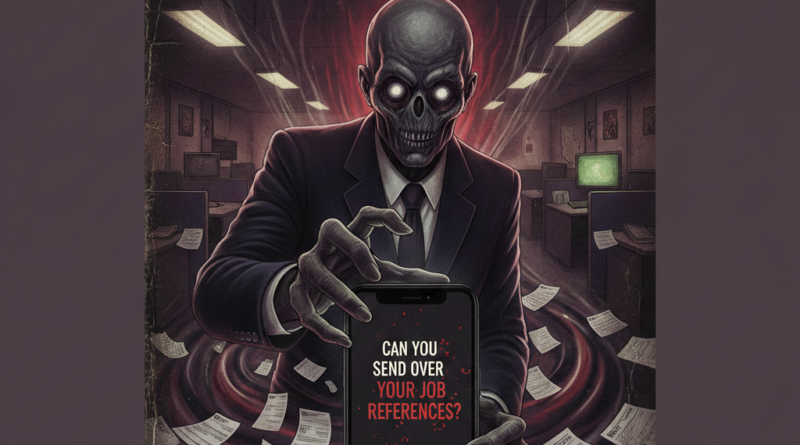
Can You Send Over Your job References?” And Other Jump Scares from Hiring Managers
You did it. You survived the interview, oversold your “passion for collaboration,” and pretended you love working in fast-paced environments that are definitely just understaffed. You’re already mentally spending your new salary on Starbucks, rent, and emotional damage when the email hits:
“We’d love to move forward. Can you send us 2–3 professional references?”
Ah yes. The moment every millennial and Gen Z worker remembers they’ve spent the past five years rage-quitting jobs, blocking ex-managers, and trauma-dumping to coworkers instead of impressing them.
Now you’re staring at the screen like:
“Who, exactly, is supposed to vouch for me? My DoorDash driver? My therapist? The dog?”
Let’s talk about when jobs actually ask for references, what they really want, how much they actually check, and how to fake being a functional adult without lying (too much).
The “We’re Serious Now” Stage: When They Drop the R‑Word
If they’re asking for references, you’re not doomed. You’re just under review like a suspicious Amazon purchase.
Most U.S. jobs don’t ask for references in the application. That’s way too much effort for people they plan to ghost anyway. Instead, they wait until:
● You’ve done the interviews.
● You made it past the “culture fit” nonsense.
● They kinda want you… but need someone to confirm you won’t burn the place down.
That’s the references phase: not quite hired, not quite free.
You’ll usually see it:
● Right before an offer
● Along with “background check” forms
● After the final round, when you’ve already emotionally accepted the job and started mentally quitting your current one
Translation: “We like you, but also… do other adults like you?”
Jobs use references to:
● Confirm you actually did the work you claimed
● Figure out if you’re a nightmare to manage
● Check if “collaborative team player” actually means “won’t start Slack wars over fonts”
Annoying? Yes. Optional? Not really.
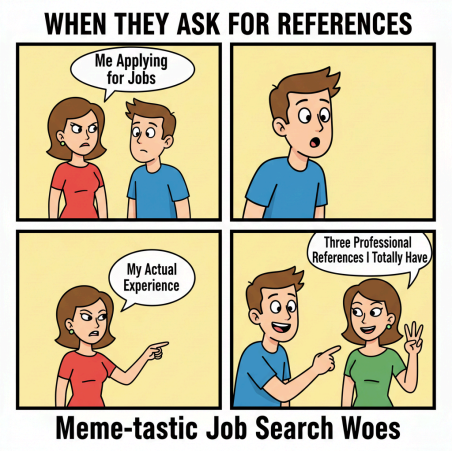
Who They Actually Expect You to List (And Who You Definitely Shouldn’t)
No, you cannot list your mom. Even if she thinks you’re “a delight to work with.”
In a perfect LinkedIn fantasy world, you’d have:
● Former managers who loved you
● Senior coworkers who admired you
● Clients who think you walk on water
In reality, you have:
● One cool ex-coworker
● A neutral manager who tolerated you
● That one professor you haven’t emailed since 2019
Still works. The bar is low.
Common acceptable references:
● Former managers or supervisors (gold tier)
● Senior teammates who worked closely with you
● Clients, vendors, or partners (if relevant to your jobs)
● Professors or advisors (if you’re early-career and not 47)
References you should not use:
● Family (HR will judge you so hard)
● Besties who never worked with you (“we met on Fortnite” is not professional context)
● That one manager you rage-quit on with a 3-paragraph Slack message ● People who barely remember your name
If they have to ask “who is this?” when the recruiter calls, you’ve already lost.
Bare minimum hack:
● Ask 2–3 semi-functioning adults from your past.
● Check they’ll say nice things.
● Make sure their LinkedIn doesn’t scream “scam artist.”
Do They Really Call? Or Is This Just HR Cosplay? Shocking plot twist: a lot of companies don’t actually call all your references.
You know that panic when they ask for three references and you spiral trying to resurrect ex-managers from the dead? Sometimes… they just file them and move on.
Typical reality:
● Some places call one reference.
● Some email all three with lazy forms.
● Some ask for references just to feel professional and never follow up.
Yes, you created a spreadsheet and drafted multiple emails for a process that might not even happen. Congratulations, you’re onboarding your anxiety.
But when they do call, they usually ask:
● “Can you confirm their dates and role?”
● “How did they handle feedback?”
● “Would you rehire them?”
They are not:
● Requesting a novel
● Asking about your GPA from 2016
● Digging into your entire trauma arc
References aren’t expected to say you’re perfect. They just can’t say: “Oh god. Absolutely not. That person almost set the office on fire.” Low bar. You can clear it.
The Group Chat Moment: Telling People You Volunteered Them
If you don’t give your references a heads-up, you’re the villain.
Bare-minimum decency:
● Ask them first.
● Tell them what the job is.
● Remind them of things you did so they don’t black out mid-call. Because nothing’s worse than:
Recruiter: “Can you tell me about Alex’s time on the marketing team?” Reference: “Uh… what did Alex do again?”
Yes, this has happened. Yes, it kills vibes instantly.
Your “hey, can you be my reference?” message should:
● Be short, not awkward
● Include the job title and company
● Include 2–3 bullet points they can brag about
Example energy:
● “Can you mention the time I handled that chaotic launch?”
● “If they ask about feedback, maybe don’t mention that one meltdown during Q4?”
You’re basically giving them a cheat sheet to talk you up without sounding like they just met you at a networking event.

Why Jobs Ask for References When They Already Have Your Whole Life
Because trust issues. Corporate has them. Bad.
On paper, they’ve got:
● Your resume
● Your LinkedIn that you barely update
● Your interview performance where you pretended to be normal ● Maybe a background check
So why ask for references on top?
Because:
● They want pattern confirmation – “Are they chill everywhere or just in interviews?”
● They’re scared of hiring disasters
● Some manager got burned by one unhinged hire in 2014 and now it’s policy forever
Also, low-key, it’s cheap. Calling people is free. Training the wrong person is not.
What references reveal that your resume doesn’t:
● How you handle stress
● Whether you’re secretly toxic
● Whether you quietly rage-quit everything
● If you’re the “quietly does everything” or “loudly does nothing” type
Jobs don’t need saints. They just don’t want lawsuits, full revolts, or HR crying in the bathroom.
Red Flags They’re Secretly Sniffing For
You’re worried they’ll say you were late once. They’re worried you started full-on wars.
Recruiters and managers are listening for:
● Long, awkward pauses
● “Uhhh… that’s a tough question”
● “I’d say they’re… passionate” (code for: unhinged)
● “Well, in the right environment…” (translation: please not here) Stuff that might hurt you:
● References that don’t answer at all
● Conflicting info about your job titles or dates
● Vibes that you were constantly arguing, quitting, or missing
Stuff that usually doesn’t kill your chances:
● You didn’t love your last job
● You made normal human mistakes
● You weren’t “a rockstar,” just competent
Some of you think you’re getting rejected for tiny things when actually you’re fine. Others think you crushed it and your old boss is absolutely torching you on the phone. Fun little lottery.
What If Your Work History Is Just… Chaos?
“Please list 3 professional references” is comedy when your career has been one long soft-launch.
Maybe you:
● Hopped jobs every 6 months
● Worked mostly retail or gig work
● Had a toxic manager who’d absolutely sabotage you
● Got your last boss fired (king behavior, but still)
You’re not doomed. You just have to get creative without lying your face off.
Acceptable chaos references:
● A shift lead or assistant manager who actually liked you
● A senior coworker who saw you doing everything while the manager scrolled Facebook
● A client or customer you worked with repeatedly
● A professor, advisor, or supervisor from school projects
If you did group projects and carried everyone: congratulations, you’ve been leadership-material for free.
You can also:
● Combine older references with recent ones
● Use a manager from 2–3 jobs ago if you’ve stayed in similar roles ● Explain (briefly!) if a reference is unavailable because the company imploded, restructured, or was a red flag factory
Hiring people get it. Jobs are messy. They just don’t want to feel like they’re walking into a legal episode of “Surprise!”
That Awkward “Can I NOT Use My Current Boss?” Question No, you don’t have to snitch on yourself to the job you’re trying to escape.
If you’re currently employed and quietly interviewing, telling your boss “hey, someone may call to confirm I’m trying to leave” is… insane.
Most recruiters know this and will:
● Let you skip current employer as a reference
● Use previous managers instead
● Or accept a senior coworker, cross-functional partner, or project lead You can say:
“I’d prefer not to notify my current employer until we’re further along in the process, but here are other references who know my work well.”
That’s normal. That’s standard. That’s not suspicious.
Suspicious is when:
● You have no one from anywhere willing to speak for you
● Every reference is weirdly vague or unreachable
● You clearly burned every bridge and then salted the earth
If that’s you… maybe do a little damage control before applying to 57 new jobs.
The Bare-Minimum Reference Strategy So You Don’t Look Like a Walking Red Flag
You don’t need a 12-person advisory board. Just don’t wing it like a gremlin.
Quick survival guide:
● Have a small list ready (3–5 people)
● Rotate who you use so you’re not burning them out
● Keep them updated when you’re job hunting
Before you send names:
1. Ask if they’re cool being a reference.
2. Tell them the job title, company, and main responsibilities.
3. Remind them of projects you did together.
4. Confirm their best email and phone.
After:
● If you get the job, text them a thanks like a semi-decent human. ● Maybe buy them a coffee if the paycheck hits.
Shocking concept: maintaining relationships that aren’t just meme exchanges.
You Read This Whole Thing About References. Now What?
If you made it this far, you’re either in the panic zone or avoiding your real job. Either way, relatable.
Here’s the honest summary:
● When jobs ask for references, it usually means you’re in the final stretch, not on the chopping block.
● They want to make sure you’re not secretly a lawsuit in human form. ● They don’t need perfection; they need “reasonably not chaotic.” ● A couple of decent humans vouching for you > a 7-page resume full of fluff.
If your references are a little patchwork, welcome to adulthood in late-stage capitalism. You’ll be fine. Probably.
Anyway, go text that one ex-coworker who liked you and say, “Hey, random—but can I list you as a reference?” Bribe them with coffee later. Or vibes. Or shared trauma.
You clearly care more than most applicants—they didn’t even Google “when jobs ask for references.” You did. Gold star, overthinker.